Sunday, 22 October 2017

Agency- Voice, Choice and Ownership

Recently I saw that The IBO has announced that the IB Primary Years Programme (PYP) will  be enhancing their programme by adding the concept of agency. Having taught PYP at an International school in Dubai in the past I was interested in this addition and how they will prepare to develop this.


Currently I am teaching in New Zealand where many schools and teachers have been researching and incorporating agency or student agency through the New Zealand Curriculum Framework for some time.

As it is a long weekend my family have been enjoying gardening and being outside. Mr 4 and I noticed the new koru growing in our garden. The design of the new PYP Graphic reminded me of the koru and so I added the core agency concepts onto a photo we took.


I like the symbolism that comes with the koru. The idea of new growth, perpetual movement, and strength. A koru unfurls to become a new part of a plant that grows and changes over time. Also, the visual link between agency and this special taonga really appeals to me as a teacher and learner. 

I look forward to seeing how adding agency into The PYP will change  the links between The Learner, Learning and Teaching and The Learning Community.  


Monday, 9 October 2017

STEM - Picture Perfect

Encouraging a passion for learning about STEM through the use of picture books has been part of my teacher inquiry this year. In Term 1 I started to investigate into how this supported young writers and ESOL students with both Literacy and STEM concepts.  Additionally offering a platform to share questions, test ideas and record our observations in a range of mediums through Seesaw has been a huge motivator. Especially, for students who have amazing ideas but struggle to share them in a written format. It also means that students became engaged by their ability to independently share their ideas experiencing success and authentic feedback from parents, teachers and their peers.


 Initially I linked their learning in with the Junior STEM focus areas. Overtime I have branched out to look at other areas that might be of interest to students so we can foster passions and specific areas for Literacy.


Also, when possible I used levelled readers as they could support the link between reading, writing and STEM for students who needed extra support in these area.


Many picture books lend themselves to being used to solve open ended problems where there are many right answers. They spark student interest and curiosity through their interaction with characters, settings and problems while giving them a solution. They provide a good platform for students to bounce STEM ideas off and develop creative approaches from. They show a successful and often creative problem solving approach to scaffold their thinking. To be interested in solving a problem there needs to be some sort of vested interest. Picture books provide this engagement. If a character solved the problem like this how could you do it differently?  What could you do to help in this situation? How could you use the same materials in a different way? STEM concepts can be carefully chosen to link with a particular focus or a simple challenge.


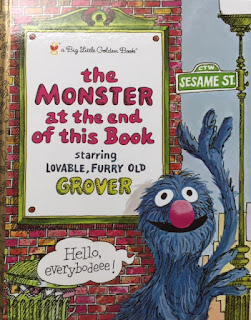

Using picture books as the driver helps to support creative problem solving and collaboration. Students can see that characters have to over come problems and often it takes failure or more than one attempt to come to a possible solution. 

I am looking forward to continuing with my STEM journey in Term 4 and adding in coding through Linda Liukas'  amazing picture book 'Hello Ruby, Adventures in Coding.' Watch this space!


Wednesday, 27 September 2017

Communication, Coding and Literacy

Our whole school vision this year is inquiring into STEM and I have been incorporating aspects of this into my ESOL/Literacy program through out the year as part of my teacher inquiry. Our main reasons to incorporate STEM are to support our learners to target and increase exposure to:

-Real World experiences
-Collaboration
-Research
-Problem Solving
-Creativity

The skills we would like the students to learn from this over the school are:

Science- Chemistry and Physics
Electronics
Coding
Robotics

Some of the key concepts are Computational Thinking, Pattern Recognition and Algebraic Thinking.

So I was excited to find out about Lisa Liukas and her book "Hello Ruby. Adventures in Coding."

Here is a quick sketch that I made in January at our teacher only day:


Here is the opening idea from Lisa's book from Chapter 1 Activities: " All big problems are just tiny problems stuck together. Sometimes the only way to learn something new is to make a lot of mistakes first." Page 70


So her ideas really struck a chord with me as my initial vision from that day link closely with hers. I really love how she has a story about Ruby and her friends with each character helping Ruby. Looking through Lisa's book she has some amazing and very kid and teacher friendly ways to approach concepts such as sequence, decomposition and pattern recognition all in the first chapter! Her passion for storytelling and utilizing picture books to teach children about programming and coding really resonate with me.

I am looking forward to using Lisa's book to  find out more about coding alongside my students next term!

Sunday, 10 September 2017

Communication, STEM, Inquiry (CSI)

Recently I have changed my ESOL planning to streamline what I do and to give the students more opportunities to explore language through inquiry. This term we are inquiring into our 5 senses to find out about food and drink. The overarching reason is to increase knowledge of English through real life experiences.


Our 'CSI' (Communication, STEM and Inquiry) has been embraced by the students and they look forward to our STEM 'challenge' workshops and baking. Students enjoy trying new kinds of food and drink and even sharing their own recipes with their peers.


It has really boosted the confidence of students to try new things and to start to think about food hygiene, healthy food options and sometimes treats. 

We have used Seesaw to share our learning with family and teachers. In doing so students have increased student voice and choice over what they share and have gained a feeling of pride about their learning. 


I look forward to continuing our CSI investigation in Term 4 and I am planning to add Coding into the Communication component. Watch this space!

Sunday, 30 July 2017

STEM and ESOL-Language and Learning

During Term 1 and 2 I have been incorporating STEM activities into my ESOL workshops. These have proven to be really motivational for students and helped them to collaborate and talk to each other about what they can observe and what they think may happen.


I have also used picture books to help reinforce different language concepts or STEM ideas. Having this Literacy link means that students with English as a second language can identify and discuss pictures, as well as text with support.


It has helped students collaborate on a set goal and work in a team to test and problem solve. Often students will come up with creative ways to approach these STEM challenges if they have the time to tinker and test. Students who may be shy or introverted can show their thinking as they are making. They are developing their ideas in a fun, safe environment where it doesn't matter if you fail.


Engagement and a shared experience helps to solidify learning of language skills through these STEM activities. Most importantly it helps students to let go of inhibitions and to talk, laugh and learn!


Sunday, 28 May 2017

Sharing our Learning with Seesaw

We have started on our Seesaw journey in Term 1 and my reading and writing students are excited to share their learning! Lots of parents have signed up and this has made such a positive impact on my students learning and attitude towards Literacy. They know that when they publish on Seesaw that their work will be viewed, in some cases instantly by their parents. It has been wonderful to see parents give their children such positive feedback. This in turn has motivated students to keep on trying even when things might be difficult.


For those who haven't had a parent sign up Pod Teachers have commented on their learning through our Seesaw Blog 'Wha Out.' So they too have a chance to increase their student voice in sharing what they are proud of.


All students love the independence of being able to take photos, videos, draw, write, record and label all by themselves. Seesaw has proven to be a really user friendly Blogging platform for my students and myself. It has also seen the highest whanau involvement of any Blog I have used in the past 10 years! I'm looking forward to seeing where our Seesaw journey takes us this year.


Monday, 20 March 2017

Seesaw and Student Voice

I have been interested in Seesaw for some time as I have seen it well utilized during my observational visit to Russell Street School in December. I have also seen amazing examples of using it through Twitter.
Innes came to have a professional chat and to discuss learning goals for ICT this week. After talking through different options I decided that using Seesaw would be the best option for my students to increase their student voice by sharing with whanau, teachers and friends. It should allow them independence and choice to decide what parts of their learning they would like to share. Also, it will allow for parents, teachers and students to see the their learning progressions in Literacy and STEM.

I look forward to implementing the use of  Seesaw for my Te Akoranga Raukura learners. Watch this space!